Refresh, Redesign or New Website? How to Decide
By Don Farber, Principal, Co-Founder & CMO, Amplified Audience Partners
A website redesign shouldn’t just make your site look better. It should make your business perform better.
A great-looking website should be as impactful as it is beautiful. Cool new features should communicate value, build trust, support search visibility and help turn visitors into customers. Design matters, but it should follow strategy, not lead it.
Strategy should always be incorporated into a rebuild and redesign. Image isn’t everything; it’s part of a bigger picture, and when you incorporate it into that bigger picture, you get the most bang for your buck with your site.
That’s why, before I recommend rebuilding anything, I want to understand what’s actually holding the business back. Sometimes the answer is a new website. Often it’s fixing what you already have. Here’s how to tell the difference.
| Option | Best when | Typical timeline to complete |
|---|---|---|
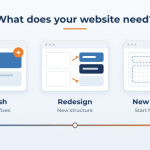
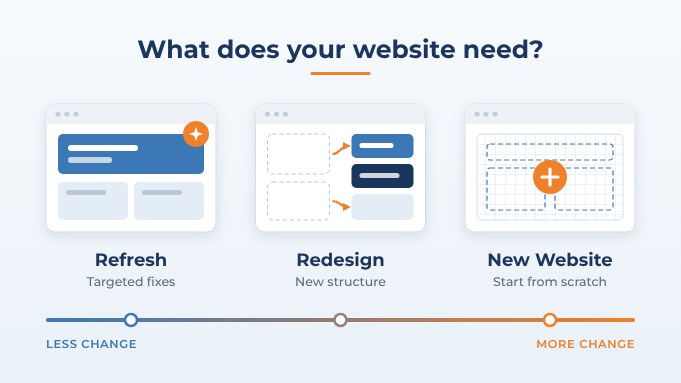
| Refresh | The foundation works, but the site underperforms or looks dated | About 8 weeks |
| Redesign | The site no longer fits your business or how you sell | Set during strategy, based on scope |
| New website | You’re starting fresh, or the current site can’t be salvaged | About 12 weeks |
Start with what’s actually broken
It happens more often than you’d think. A company comes to us convinced it needs a brand-new website. The site isn’t producing leads, it feels dated, and starting over seems like the clean fix.
Then we audit it. The real problems turn out to be weak content, confusing navigation, technical SEO issues, slow pages and no clear path for a visitor to become a lead. Meanwhile, the existing CMS and site architecture are perfectly capable of supporting every improvement.
It would be easy to sell a new website anyway. That’s not how we work. We recommend what’s best for your business, based on the data and the strategy. If the data shows targeted fixes are the better option, that’s what we’ll recommend, and we’ll make those fixes quickly.
Instead of spending tens of thousands of dollars on a rebuild, you invest in targeted fixes. You keep the search equity you’ve already earned, you spend less, and you solve the problems that were actually costing you business.
That’s why I recommend starting with an audit whenever the answer isn’t obvious. A useful one covers four areas:
| Area | What we check | What it tells you |
|---|---|---|
| User experience | Navigation, user flows, design, calls to action, mobile usability | Whether visitors can find what they need and take the next step |
| Technical health | Core Web Vitals, page speed, platform and plugin status, security, hosting | Whether the foundation is sound |
| Accessibility | The site against WCAG guidelines | What to fix for usability and ADA compliance |
| Search performance | Rankings, indexing, technical SEO, schema, and how AI platforms describe you | Whether Google and AI tools understand and trust your site |
If most of the issues sit in content, design and on-page SEO, a refresh will usually solve them. If they sit in the structure, the platform or the way the site was built, it’s time to talk about a redesign or a new site.
Signs a refresh is enough
A refresh keeps your platform, your structure and most of your URLs. We make targeted improvements to content, design, navigation, UX and SEO, usually in about 8 weeks. If the bones are good, this is where I’d start. Here are some signs that just a site refresh might be right for you:
- Your team can update the site without calling a developer, and the platform is current. That’s the hardest part of a website to get right, and you already have it.
- People find what they need, but the site looks like it was built years ago. That’s a surface problem. New typography, imagery and layouts can fix it without touching how the site works.
- Your messaging describes the company you were three years ago. Rewriting your key pages often does more for leads than any design change.
- Pages load slowly, calls to action are buried, or you rank for important searches but not as well as you should. Speed, conversion paths and on-page SEO are almost always fixable in place, without the risk of changing every URL.
Signs you need a redesign
A redesign rethinks the structure, design and content, and often the platform, while keeping your domain, your brand and the pages that already perform. It makes sense when the site no longer fits the business.
The clearest signal is this one: traffic is steady, but leads aren’t coming in. People are finding you and leaving without taking the next step. That’s a structure and messaging problem, and a fresh coat of paint won’t solve it.
Other signs point the same way:
- Your services, audience or positioning have changed since the site was built, so the pages are organized for buyers you no longer target.
- Navigation has grown messy one page at a time. Menus are crowded, key pages are buried, and similar content lives in three places.
- Every update goes through a developer. If changing a headline means filing a request and waiting, your content goes stale and your team stops trying.
- The site struggles on phones. Text is tiny, buttons are hard to tap, and Google is judging you on the mobile version first.
When a new website is the right call
Sometimes starting over really is the smart move. A new website, typically about 12 weeks from kickoff to launch, makes sense when:
- You’re launching a new company, brand or business line that deserves a site planned around its own audience and goals.
- The platform is outdated, unsupported or a security risk. If the CMS no longer gets updates or key plugins have been abandoned, every month on it adds risk. A planned migration protects your content and search visibility on the way out.
- You’ve hit the limits of a template or website builder. When every request runs into what the theme can’t do, and the list of repairs costs close to what a new build would, rebuilding on a flexible foundation is the better investment.
When a redesign hurts more than it helps
I’ve seen redesigns hurt rankings, and the cause usually isn’t what people expect. The new site looks impressive. But the design is so heavy that it slows the site down, or so busy that it confuses the story the business is trying to tell.
Search engines notice slow pages. Visitors notice when they can’t figure out what you do. Either way, the redesign that was supposed to help ends up costing traffic and leads.
The other risk is technical: changed URLs with no redirects, deleted pages that used to rank, or SEO settings that didn’t make it to the new site. That part is preventable with planning:
- Inventory every existing URL, along with its traffic, rankings and backlinks.
- Map each old URL to its new home with a 301 redirect.
- Keep or improve the content that already performs instead of cutting it.
- Run a full technical SEO check, including page speed, before launch.
- Watch Google Search Console after launch and fix problems fast.
Good design and good performance aren’t in competition. But when they conflict, performance should win.
Why website projects run late
On average, a new website takes about 12 weeks from kickoff to launch, and a refresh about 8. In my experience, the number one reason projects run late isn’t the number of pages or features. It’s waiting on photos, logins, page copy and approvals from the client.
We take as much off your plate as we can, but we still need your input. Naming one decision-maker on your side and gathering logos, photos and logins before kickoff are the two simplest ways to keep a project on schedule.
How we approach it at Amplified
Refresh, redesign or new build, every project starts the same way: with strategy, not design. We define your goals, audiences and what each visitor should be able to find or do, and we inventory every existing URL before anything changes. Then we plan the structure and content, design and build the site with the right specialists from our curated network, test every page, form and integration, and support you after launch.
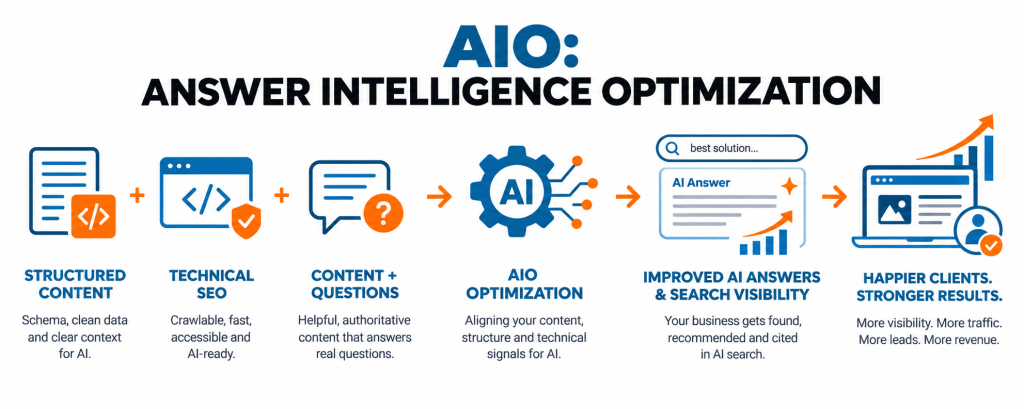
The site is built for people first, and for search engines and AI platforms too, with answer-first content, connected schema and SEO in the foundation rather than added at the end. And when the project is complete and paid in full, you own your website, its content and your domain.
Frequently asked questions
What’s the difference between a website refresh and a redesign? A refresh keeps your platform, structure and most URLs, and improves content, design, navigation, UX and SEO. A redesign rethinks the structure, design and content, and often the platform, around how your business works today.
How long does a website project take? A new website takes about 12 weeks on average and a refresh about 8. Redesign timelines are set during strategy, based on scope. The biggest factor is usually how quickly content, assets and feedback come together.
Can a redesign hurt my Google rankings? Yes, if it’s poorly planned. Heavy design that slows the site, changed URLs without 301 redirects and deleted content are the usual causes. A redirect map, a page speed check and a full technical SEO review before launch prevent most of it. At Amplified Audience Partners, we do everything we can to protect your rankings when working on your site.
Should I get a website audit before deciding? If the answer isn’t obvious, yes. An audit of user experience, technical health, accessibility and search performance shows whether your problems are on the surface or in the foundation, before you spend money on either. We can run a comprehensive audit on your site and consult with you on which path best suits the needs of your business.
Not sure what your site needs?
Let’s look at it together. I’ll tell you honestly whether you need a refresh, a redesign or a new build, and if it’s a project, you’ll have a timeline and a cost before any work begins. Sometimes the best advice is that you don’t need a new website at all.
Explore Website Design & Development or schedule a consultation.
See more Amplified Audience Partners insights in Google Search.